
Showing posts with label 日本語. Show all posts
Showing posts with label 日本語. Show all posts
Monday, April 27, 2015
Tuesday, April 14, 2015
A hollow victory!
Barring a sudden society-ending solar flare or other such cataclysm, I wager that my offspring will one day know the torments of Mario's parties, and the worth of their associated victories.
I've probably said it before, but one of the things I love about studying Japanese (though this probably applies more broadly to language study in general) is the discovery of similarities. Some English expressions are exactly or nearly the same as Japanese expressions, in literal construction.
Here's such a one:

むなしい勝利(しょうり), which means "hollow victory." むなしい has some interesting applications:

むなしい夢 - the futile dream of relying on your skill to achieve Mario Party victory.
I've probably said it before, but one of the things I love about studying Japanese (though this probably applies more broadly to language study in general) is the discovery of similarities. Some English expressions are exactly or nearly the same as Japanese expressions, in literal construction.
Here's such a one:
むなしい勝利(しょうり), which means "hollow victory." むなしい has some interesting applications:
むなしい夢 - the futile dream of relying on your skill to achieve Mario Party victory.


Tuesday, March 10, 2015
Ogre up your heart!
One interesting byproduct of being multilingual (or perhaps of just being at a certain point in your language studies) is that sometimes you'll just hear or read something and matter of factly wonder how that translates into your other language(s). Not because it's of any consequence, and it may just be a passing ponderance. If you're anything like me, though, it's a fairly common thing.
I was in church the other day and the responsorial was "If today you hear his voice, harden not your hearts."
Harden not your hearts, eh? Pretty cool phrase. I wondered what it was in Japanese, but was in no position to look it up. So I forgot pretty quickly. But I have remembered! Providence?

First off, a little research reveals that the passage of interest is from Psalms 95:
Today, if only you would hear his voice,
8 “Do not harden your hearts as you did at Meribah,
as you did that day at Massah in the wilderness,
Righto. Let's look up the Japanese!
8 あなたがたは、メリバにいた時のように、また荒野のマッサにいた日のように、心をかたくなにしてはならない。
The Japanese uses a literal parallel - 「心をかたくなにする」。 But this appears not to be the only way to translate the expression. ALC, I summon thee!

One of these in particular is pretty interesting! 「心を鬼にする」
「鬼」is a somewhat versatile word that can mean anything from "goblin" to "ogre" to "demon." Here we have it in verb form, which I've never seen before. So this expression is literally something like "Make your heart ogrish." Ogre up that heart!
Friday, February 27, 2015

Thursday, February 12, 2015
Dance of the flurries
I just learned a cool J-go turn of phrase from one of my colleagues, who came in from his smoking break to inform me that it was flurrying out:
「小雪が舞う」
(ゆきがまう)
Normally in Japanese, we say 「雪が降る」 (ゆきがふる) to express that white stuff is falling from the heavens. 「小雪」(こゆき), literally "small snow," apparently means "flurries."
And 舞う (まう), which means "to dance," can be somewhat poetically applied here. You can picture it, can't you? A beautiful little snowflake, dancing its way down from the sky. I was told that 「舞う」can also be used to describe falling flower blossoms. Elegant, huh?
「小雪が舞う」
(ゆきがまう)
Normally in Japanese, we say 「雪が降る」 (ゆきがふる) to express that white stuff is falling from the heavens. 「小雪」(こゆき), literally "small snow," apparently means "flurries."
And 舞う (まう), which means "to dance," can be somewhat poetically applied here. You can picture it, can't you? A beautiful little snowflake, dancing its way down from the sky. I was told that 「舞う」can also be used to describe falling flower blossoms. Elegant, huh?
 |
| This GIF doesn't particularly apply, but I like the Peanuts, so. |
Tuesday, December 2, 2014
皮切りにして: Cut the skin
A belated happy Thanksgiving to my American readers. I hope you had a wonderful day and hopefully a little time to relax!
Myself, I'm balancing the relaxation with an increasing need to study. On one hand, I've decided to change tracks and pursue IT. It seems to be a pretty lucrative field with a lot of jobs (as compared to just looking for Japan-related positions), and I've always liked computers. I'm hoping to get my CompTIA A+ certification early next year, but the study guide is 1400+ pages, so...yeah, a lot to go through.
On the other hand, I have no intention of abandoning Japanese. Refocus a bit yet, but I still may have a more serious go at translation someday. And with that in mind, I'll be sitting for the JLPT N1 again this Sunday. I don't feel adequately prepared, but at least I'm still working at it.
And so in the spirit of N1 study, I offer up this grammar point I!
皮切り(にして)
I was going through my good ol' Kanzen Masters grammar study book when I came once more across this one. 皮切りにして (かわきりにして) - "to begin with."
Now I could just file that away and move on, but it I'm more likely to remember if I actually try to figure out the structure behind grammar points like this. Literally, this looks like "Cut the skin and..." And yet it somehow works out to "beginning with." There must be some interesting story behind this expression, right?
Cue the Google digging. Ah, results.
It seems this expression finds its origin in traditional Eastern (Chinese) medicine. Specifically, something called moxibustion. Huzzah for learning new English words, too!
Moxibustion is, apparently, in the same vein as acupuncture. Except instead of sticking people with needles, you stick them with burning, uh...sticks. And this can also be done in conjunction with acupuncture needles. Sounds relaxing, right?
Well as you might imagine, this can sting a bit. The expression came about because at the start of being moxibusted upon (I'm sure that's not the medical term for it, but please excuse this humble layman), one feels as if one's skin is being cut. Ouch. Hence "Cut the skin" came to mean "to begin with."
And now you know.
Image Source
Myself, I'm balancing the relaxation with an increasing need to study. On one hand, I've decided to change tracks and pursue IT. It seems to be a pretty lucrative field with a lot of jobs (as compared to just looking for Japan-related positions), and I've always liked computers. I'm hoping to get my CompTIA A+ certification early next year, but the study guide is 1400+ pages, so...yeah, a lot to go through.
On the other hand, I have no intention of abandoning Japanese. Refocus a bit yet, but I still may have a more serious go at translation someday. And with that in mind, I'll be sitting for the JLPT N1 again this Sunday. I don't feel adequately prepared, but at least I'm still working at it.
And so in the spirit of N1 study, I offer up this grammar point I!
皮切り(にして)
I was going through my good ol' Kanzen Masters grammar study book when I came once more across this one. 皮切りにして (かわきりにして) - "to begin with."
Now I could just file that away and move on, but it I'm more likely to remember if I actually try to figure out the structure behind grammar points like this. Literally, this looks like "Cut the skin and..." And yet it somehow works out to "beginning with." There must be some interesting story behind this expression, right?
Cue the Google digging. Ah, results.
It seems this expression finds its origin in traditional Eastern (Chinese) medicine. Specifically, something called moxibustion. Huzzah for learning new English words, too!
Moxibustion is, apparently, in the same vein as acupuncture. Except instead of sticking people with needles, you stick them with burning, uh...sticks. And this can also be done in conjunction with acupuncture needles. Sounds relaxing, right?
 |
| That "being flayed" sensation means it's working. |
Well as you might imagine, this can sting a bit. The expression came about because at the start of being moxibusted upon (I'm sure that's not the medical term for it, but please excuse this humble layman), one feels as if one's skin is being cut. Ouch. Hence "Cut the skin" came to mean "to begin with."
And now you know.
Image Source

Saturday, October 18, 2014
Kinda 和製英語:Freeter
During a recent playthrough of Pocket Academy I noticed some things. Things that hadn't latched on the first time around. That is the general purpose of subsequent playthroughs, so huzzah. One particular word leapt out at me. "Spectacular! Another 和製英語 for the scrolls," thought I. But it was a little more complicated than that.
There is an ever-expanding trove of katakana words attached to the Japanese language. Many are obvious enough. I imagine that「ハンバーガー」has befuddled relatively few who have toiled to learn the runes. But then there are others; they are words which, for we natives of the English tongue at least, straddle the boundaries of "Whathewhat?" and "This...could be of English origin...?" They often claim cloudy or error-laden origins. There are so many English-derived katakana words, you see, that specimens of other inspiration can be somewhat distressing.
And so it was with 「フリーター」. At first I thought it was clearly 和製英語. I know enough English to know that "free" is definitely a word we use. A quick dictionary look-up revealed that a フリーター is someone who is a permanent part-time worker. I suppose they drift from part-time job to part-time job. But how does "free" relate to this? There must be something else at work here.
 |
| I condemned this digital child to a life of retail vagrancy, for you. |
As much as I love the new age of Google search, a part of me still appreciates the simplicity of my good old electronic dictionary. So that was where I first turned for answers.
 |
| "Does this qualify as 'old school' yet?" I pondered. |
Ah-ha! So it's ドイツ語 (German), then. Well played, Japanese. But hold on moment - the entry says 和製 free + Arbeiter ドイツ)の略. So it's 'Japanese' use of "free" + some German (that is the origin of アルバイト, by the way - another troubling katakana denizen).
So it's....Engerman? And so we do ultimately turn to Google for help.
Wikipedia has the story. It's a bit of a read, so we'll just skip to the bottom line of what we're interested in:
語源は
英語のフリー free(「時間の自由な」という意味の略)
ドイツ語で労働を意味し、日本語では非正規雇用を意味するアルバイト Arbeit
「~する人」という意味の英語 er、または同じ意味のドイツ語 er
の3つをつなげた和製の造語(「フリー・アルバイター」の略称)である。
So
1. English's "free" +
2. German's "arbeit" +
3. Engish's "er" (someone who does something)
= フリー・アルバイター. Then we shorten, which almost completely removes the German part but leaves a sewn together incomprehensible English result. フリーター. Freeter. That's 和製英語-y enough for me.
Word.
Monday, July 28, 2014
TEPCO tries to summon walls of ice?
RocketNews24 reported that TEPCO is trying to create walls of ice (reinforced by soil and cement) around the Fukushima No. 1 reactors so as to keep in the contaminated water. Unfortunately the walls aren't shaping up as planned.
| Only 3 mana? What's the problem? |
You can read more about the story at RocketNews or the Asahi Shimbun. I haven't been following the reactor news super closely, as the situation always seems to be that basically "things are bad." However it's an important story to keep track of, both for Japan and other countries that use nuclear power. I'm neither gung-ho for or against nuclear energy, though I lean more towards it being a necessity until we can achieve more efficient sustainable energy (we're still far from cheap and abundant solar or wind power). Still, it quite evidently does have its risks, especially when power plants are not well-maintained.
Regardless, shall we take a look at Yahoo Japan!'s article for a quick J lesson?
If you've studied Japanese for a bit, you're probably familiar with the word for "refrigerator," even if you're not familiar with the kanji: 冷蔵庫 (れいぞこ). For the longest time, extending through my years in Japan, I could never remember the similar word for "freezer," which is 冷凍庫 (れいとうこ).
Here in this article, the kanji for "freeze" abounds! Let's look at a couple of excerpts from one sentence:
1.「氷の壁」が4月末の着工から3カ月たっても凍らないため...
"Since the construction on the wall of ice began in April, and it has not frozen despite three months passing... "
凍る (こおる) = to freeze.
I think the easiest way to remember this is to think of かき氷 (kakigori).
As it happens, こおり (氷) means "ice" and こおる (凍る) means "to freeze." I have a hunch that 氷る can also mean "to freeze," but I've never seen that kanji used that way.
2. ...来週にも1日10トンの氷を投入し凍結を促す対策を開始することを明らかにした。
"...a plan has been announced, starting next week, to begin dumping 10 tons of ice per day into the ice trenches in order to quicken the freezing process."
凍結 (とうけつ) = freeze (the act or process of freezing)
This other reading of 「凍」as 「とう」is the reason I always froze up and couldn't remember the word for "freezer." I'm not sure there is a great way to remember it (if you think of one, let me know). But if you can remember that, you can easily remember 「冷凍庫」 - just one character different from "refrigerator."
Monday, July 21, 2014
Bean Knowledge
This week I'll be taking part in a jointly run JETAADC-JASWDC Izakaya Pub Quiz event. The way I put our team together, we're lacking in the J-person department (just 3 white guys and 1 half-J guy), so I think we'll be at a disadvantage there. Normally wouldn't be a problem, but the questions are being billed as half English and half Japanese, and I'm not sure we're up to snuff on our Japanese pop culture. Still, we do possess some kernels of knowledge. Or beans of knowledge.

「トリビア」turns up almost 4 million results.

Yes, that is the sorry lead-in to today's Japanese nubbin. The word is 豆知識 (まめちしき), which literally means "bean knowledge." ALC defines it as "bits of knowledge," so I imagine you're supposed to visualize little scattered knowledge beans. Rikai-kun also offers "trivia" as a possible definition.
I know there are other (perhaps more ubiquitous) terms for "trivia," so I just did a cursory couple of searches.
「トリビア」turns up almost 4 million results.
「豆知識」, meanwhile, comes up with 28 million. Judge for yourself.
Sunday, February 16, 2014
10 Colors
Although they may not come up super frequently, Japanese expressions and sayings can be fun to learn. One of the first ones I remember learning is 一石二鳥 (いっせきにちょう) - "two birds with one stone." That's also a good example of 四字(熟語)- an expression made up of four kanji. There are tons of these yoji.
If you're familiar with the expression それぞれ, which can be used to mean "to each his own," then here's another yoji for you:
十人十色
If you've studied some basic kanji, you should be able to recognize these ones and maybe glean the meaning to be found here. 十人十色 (じゅうにんといろ)is made up of:
十 - 10
人 - people
十 - 10 (again)
色 - color
So 10 people, 10 colors. 10 people each have their own color. Each individual has his own likes and preferences. To each his own.
Alc: 十人十色
If you're familiar with the expression それぞれ, which can be used to mean "to each his own," then here's another yoji for you:
十人十色
 |
| 1, 2, 3...close enough. |
十 - 10
人 - people
十 - 10 (again)
色 - color
So 10 people, 10 colors. 10 people each have their own color. Each individual has his own likes and preferences. To each his own.
Alc: 十人十色
Monday, January 27, 2014
Todoufuken!
It's cool/frustrating that you can believe yourself to be so familiar with Japan and yet be unaware of some pretty basic terminology. Of course these gaps are frustrating, but I say this is "cool" because on the upside there are always these little tidbits to learn.
One term that I only just learned relatively recently is 都道府県 (とどうふけん), which sounds like a Street Fighter move but refers to Japan's 47 prefectures. I guess when I was actually in Japan I didn't really watch much TV and newspapers were a little too intimidating, so I didn't often encounter words like this.
But at any rate, why is there a special word for the prefectures collectively? Why not just 47県? Well, because they don't all share the same governmental status or structure. Wikipedia breaks it down pretty well:
"The prefectures of Japan are the country's 47 first-order subnational jurisdictions on a state or provincial level: one "metropolis" (都 to?), Tokyo; one "circuit"/territory (道 dō?), Hokkaido; two urban prefectures (府 fu?), Osaka and Kyoto; and 43 other prefectures (県 ken?). Prefectures are governmental bodies larger than cities, towns, and villages."
So while we just call them all prefectures in English, I think in Japanese there is some distinction.
Saturday, January 11, 2014
A new counter!
Japanese has a number of tricky elements that are overcome with time. One of which is the use of many different "counter" words. For those unfamiliar with the concept, it means that there are different words used for counting different types of objects.
For example if we're counting people, we can say 1人(ひとり)、2人(ふたり)、3人(さんにん)、etc...
If we want to count cars or pieces of large equipment, we use 1台(いちだい)、2台(にだい)、3台(さんだい), etc...
And then if we're counting long, thin objects, we go with 1本(いっぽん)、2本(にほん)、3本(さんぼん), etc...
There are counters for all sorts of categories - small animals, large animals, birds, small objects, countries, bowls, flat objects, floors, etc. You just kind of pick them up as you go along. There are workarounds, kind of. Some people overapply a couple of more "general" counters to simplify conversation (and maybe a little out of laziness).
Anyhow, I was reading an interesting article yesterday about the trend of convenience stores selling "premium" products. It was educational in several ways, but right now I just want to document the sighting of a counter that I was previously unfamiliar with: 斤. I imagine I must have seen this in the past and just not picked up on its meaning, but here we are. It's 「きん」- the counter for loaves!

In context, the article said:
・・・一斤250円の「金の食パン」も販売されています。
"Golden bread" is being sold for 250 yen per loaf.
Excellent!
I wonder if that can stretch to apply to non-bread loaves...

For example if we're counting people, we can say 1人(ひとり)、2人(ふたり)、3人(さんにん)、etc...
If we want to count cars or pieces of large equipment, we use 1台(いちだい)、2台(にだい)、3台(さんだい), etc...
And then if we're counting long, thin objects, we go with 1本(いっぽん)、2本(にほん)、3本(さんぼん), etc...
There are counters for all sorts of categories - small animals, large animals, birds, small objects, countries, bowls, flat objects, floors, etc. You just kind of pick them up as you go along. There are workarounds, kind of. Some people overapply a couple of more "general" counters to simplify conversation (and maybe a little out of laziness).
Anyhow, I was reading an interesting article yesterday about the trend of convenience stores selling "premium" products. It was educational in several ways, but right now I just want to document the sighting of a counter that I was previously unfamiliar with: 斤. I imagine I must have seen this in the past and just not picked up on its meaning, but here we are. It's 「きん」- the counter for loaves!
In context, the article said:
・・・一斤250円の「金の食パン」も販売されています。
"Golden bread" is being sold for 250 yen per loaf.
Excellent!
I wonder if that can stretch to apply to non-bread loaves...
Thursday, May 23, 2013
Japan Blog Matsuri: It's all about context
 Holy shinola, it's been a while since I've posted. There's a backlog of things I've been meaning to share, but I fear that time has gotten away from me. I've gotten quite a bit busier and posting regularly seems to have fallen by the wayside. These things happen, but I do need to redouble my efforts. Anyhow, moving on - it's also been a while since the last Japan Blog Matsuri. I was contacted last month by Declan of KanaKanji, who's making a move to revive it, and asked if JADJ would submit something. Well, we always do our best here to oblige.
The theme of this month's Matsuri is "Japanese in Context." Specifically I think we're asked to talk about some Japanese that was really solidified for us in a particular context. I'm doing to stretch the theme a little bit, though (申し訳ない!) and talk a bit more broadly.
If you're reading this, chances are you either know first hand or have heard that Japan has a pretty high context culture. This is built into the language. The grammar, conversational style, and vocabulary lend themselves towards subtly and indirectness. This means that without a context, it is extremely difficult if not impossible to understand precisely what's going on in Japanese (written and spoken elements with their own respective challenges). Japanese nouns and verbs normally have no distinction between singular and plural forms. Last names are often used without any kind of gender-indicative title. Subjects and objects are often implied. Take a simple sentence like 「りんごを食べる」. This could presumably be translated into English as "He/she/you/I/it (will) eat(s) (an/the) apple(s)." There are probably dozens of possible meanings for this simple two-word sentence, depending on who the subject is, whether we're talking about now or in the future (or in general), how many apples we're talking about, and whether the apple(s) in question is specific or not.
I've been thinking about this kind of thing a lot lately as I contemplate the practicality of shifting my career goals towards pursuing professional translation.
A good example of the import of context (and this is uniform for any language) can be found in the case of homophones (同音異義語). Three or four weeks ago I started taking another weekly Japanese class, and we've been briefly studying a few of these every class. Just as a refresher, homophones are multiple words that share the same pronunciation but differ in meaning and sometimes spelling. Like "fair" and "fare."
Japanese has a fair share of these that usually have different kanji and sometimes slightly different intonation. Hashi - 橋 (bridge) and 箸 (chopsticks) springs to mind. When you add 熟語 (kanji compounds), there are quite a lot of these. I think this is one of the more difficult but also more interesting elements of learning Japanese - seeing all of the ways that kanji can be cobbled together to create new words. Well, it is for me, anyway.
Friday, February 22, 2013
lol'ing in Japanese
If you frequent Japanese message boards or comment sections, or perhaps follow some Japanese Twitter accounts or have some J Facebook friends, you've probably seen roman "w"s scattered in with the kana from time to time. And you if you do frequent those sites, then probably know what they mean. If you don't and/or you're not, however, here's a quick explanation for you.
Like English and I suspect may other languages, Japanese has its own evolving "internet language." I suppose this crosses into text messaging realm as well, but I'm not sure if there's some term that encompasses both. In any case, "w" is kind of the Japanese version of "lol."
You see, the word for laughing or laughter is 「笑う」. Sometimes you'll see 「笑」 thrown into posts or comments to denote laughing. This can be further shorted to "w" for "warai."
Here's an example from the wild that I lifted from a Japanese friend's Facebook. The context is that he posted a picture of himself with his hair dyed blond, and a friend commented:
だれ?w よろしくねーん☆
(Who's that? lol Nice to meet youuuuu)
One interesting additional note is that more "w"s can be added to indicated a longer or more intense laugh. Kind of like changing it to a "lmfao," with room for more degrees in between, I suppose.
Like English and I suspect may other languages, Japanese has its own evolving "internet language." I suppose this crosses into text messaging realm as well, but I'm not sure if there's some term that encompasses both. In any case, "w" is kind of the Japanese version of "lol."
You see, the word for laughing or laughter is 「笑う」. Sometimes you'll see 「笑」 thrown into posts or comments to denote laughing. This can be further shorted to "w" for "warai."
Here's an example from the wild that I lifted from a Japanese friend's Facebook. The context is that he posted a picture of himself with his hair dyed blond, and a friend commented:
だれ?w よろしくねーん☆
(Who's that? lol Nice to meet youuuuu)
One interesting additional note is that more "w"s can be added to indicated a longer or more intense laugh. Kind of like changing it to a "lmfao," with room for more degrees in between, I suppose.
Monday, January 28, 2013
Good heart-ism
So recently we got kind of screwed over by Dell in our office. I won't go into boring detail, but suffice it to say Amazon.com took care of us (as we ordered through them) after Dell gave us the runaround on faulty equipment.
Today my boss declared that Amazon was 良心的 (りょうしんてき), and asked me what that is in English. I told him I wasn't sure, and he said "maybe something like 'kind?'" When he suggested that word choice, I was able to surmise what kanji the word uses, and I guess I've heard it before. I'm not exactly sure that 「良心的」has a direct, clean English translation (maybe "fair," "honest," or "conscientious"), but the word itself is a good example of how straightforward some terms can be in Japanese. The kanji are "good" (良), "heart" (心), and 「的」, which is kind of like "~ism" or "~like."
Today my boss declared that Amazon was 良心的 (りょうしんてき), and asked me what that is in English. I told him I wasn't sure, and he said "maybe something like 'kind?'" When he suggested that word choice, I was able to surmise what kanji the word uses, and I guess I've heard it before. I'm not exactly sure that 「良心的」has a direct, clean English translation (maybe "fair," "honest," or "conscientious"), but the word itself is a good example of how straightforward some terms can be in Japanese. The kanji are "good" (良), "heart" (心), and 「的」, which is kind of like "~ism" or "~like."
Thursday, January 10, 2013
Could you repeat that?
It's amazing sometimes how much there is to learn. Earlier I was looking briefly at today's copy of the 日経新聞 (the Nikkei) and I noticed one of the headlines contained a non-kanji character I wasn't familiar with. The word was 「いすゞ」。
I asked one of my coworkers, and it appears I discovered the hiragana version of 「々」. This character is used to indicate repetition of the character before it. For example 「色々」is another way of writing 「色色」。
According to my research, these things are called 「踊り字」or 「繰り返し記号」, though you can call them up by simply typing 「くりかえし」and scrolling through the kanji choices.
Apparently there are separate characters for use in hiragana, katakana, and kanji:
Hiragana - ゝ (or ゞ)
Katakana - ヽ (or ヾ)
Kanji - 々
As you can see, unlike their kanji kin, the kana versions can be accented to represent a change in sound, just like normal kana (though the little circle versions don't seem to exist).
Learning something like this now makes me feel a little noobish, but at the same time it's gratifying to know that there are still simple elements of Japanese like this out there for me to discover.
I asked one of my coworkers, and it appears I discovered the hiragana version of 「々」. This character is used to indicate repetition of the character before it. For example 「色々」is another way of writing 「色色」。
According to my research, these things are called 「踊り字」or 「繰り返し記号」, though you can call them up by simply typing 「くりかえし」and scrolling through the kanji choices.
Apparently there are separate characters for use in hiragana, katakana, and kanji:
Hiragana - ゝ (or ゞ)
Katakana - ヽ (or ヾ)
Kanji - 々
As you can see, unlike their kanji kin, the kana versions can be accented to represent a change in sound, just like normal kana (though the little circle versions don't seem to exist).
Learning something like this now makes me feel a little noobish, but at the same time it's gratifying to know that there are still simple elements of Japanese like this out there for me to discover.
Wednesday, January 2, 2013
あけおめ
Happy New Year! Just a quick Japanese post to start 2013.
If you follow a lot of Japanese accounts on Twitter or Facebook or other social media, you've no doubt seen a sizable amount of set phrases thrown around the past couple days. One that I started hearing a lot a few years ago (though it's quite possible it was a popular expression before that and I just was unaware of it) is あけおめ.
Japanese likes to shrink, shorten, abbreviate, and compress words and crunch them into nifty little phrases (NG, anyone?). あけおめ is a shortening of one of the two standard New Year's congratulations - あけましておめでとうございます.
Incidentally, the other standard (ことしもよろしくおねがいします) is also going around as ことよろ.
Note that these are casual and probably shouldn't be proffered to one's superiors or elders.
If you follow a lot of Japanese accounts on Twitter or Facebook or other social media, you've no doubt seen a sizable amount of set phrases thrown around the past couple days. One that I started hearing a lot a few years ago (though it's quite possible it was a popular expression before that and I just was unaware of it) is あけおめ.
Japanese likes to shrink, shorten, abbreviate, and compress words and crunch them into nifty little phrases (NG, anyone?). あけおめ is a shortening of one of the two standard New Year's congratulations - あけましておめでとうございます.
Incidentally, the other standard (ことしもよろしくおねがいします) is also going around as ことよろ.
Note that these are casual and probably shouldn't be proffered to one's superiors or elders.
Sunday, November 25, 2012
和製英語: T-Back
You might not think you'd come across this word very often, but believe it or not (and though I can't place any specific instances), this is one I've heard quite a few times. I swear it isn't part of my normal repertoire, though!

Yes, the noble thong. I guess the name is apt enough - not really much need to ponder the meaning of the Japanese for this one.
What the Japanese know as a "T-back" (Tバック) , we know as...

Yes, the noble thong. I guess the name is apt enough - not really much need to ponder the meaning of the Japanese for this one.
Friday, October 26, 2012
Card...ball?
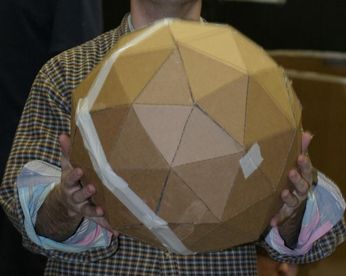
No, I'm not talking about not some amazing new J-game involving cards and balls (though that actually sounds like it could be awesome). See, there's a Japanese word that has confounded me since I learned it years ago, and that is 「ダンボール」. "Cardboard," in English. Usually when you come across a katakana word drawn from English, you can tell fairly quickly what the base word is or at least guess what it's getting at. Even with 和製英語. With this one, I really had no idea.
So, I finally decided to Google it.
The 「ダン」, as it turns out, is 「段」, which can mean tier(ed). This is most likely because cardboard is corrugated, and if you were to look at a cross-section, you would see two or more little layers kind of connected by ridges. Fair enough.
As for the 「ボール」part, which looks like "ball," I came across one explanation offered at Yahoo Answers-type websites, and one that Wikipedia kind of hinted at that I am going to proffer.
1) Whoever coined the Japanese word for "cardboard" misheard or had trouble pronouncing "board" and said 「ボール」(ball) instead. It caught on and spread, and voila. This was an answer I came across multiple times across the webiverse.
2) 「ボール」is actually short for 「ボールド」. I think this is plausible since so many words in Japanese can be and often are shortened. Wikipedia didn't explicity say this, but it did say the origin of 「段ボール」's 「ボール」 is the English word "board."
So there you have it. Man, now I wish "cardball" were an actual Japanese game.
 |
| (Source) If you drop it, you get smacked in the crotch. |
Monday, October 22, 2012
J-Word Play #30
食べると安心するケーキってなんでしょう?
(たべるとあんしんするケーキってなんでしょう?)
As always, send your answers to blueshoe[at]jadij.com. Happy riddling!
(たべるとあんしんするケーキってなんでしょう?)
As always, send your answers to blueshoe[at]jadij.com. Happy riddling!
Subscribe to:
Posts (Atom)